
PCOS Blog
PCOS & Weight Gain: Why It Happens and How to Fix It Naturally
Understand why PCOS changes fat storage, cravings, and metabolism, and what kind of diet plan actually supports hormone balance.
What is PCOS and why does weight gain happen?
Polycystic Ovary Syndrome is a hormonal condition that affects metabolism, insulin levels, and fat storage.
Most women with PCOS are dealing with insulin resistance, which means the body stores more fat even with normal eating habits. This often leads to:
- Sudden weight gain
- Sugar cravings
- Low energy
The real reason diets don’t work in PCOS
Generic diet plans fail because PCOS requires hormonal balance, not just calorie restriction. Eating less can actually slow metabolism further and make progress harder.
Best diet plan for PCOS weight loss
Focus on stabilizing blood sugar with a practical plate structure:
- Whole carbs: oats, brown rice, millets
- Protein: paneer, dal, eggs
- Healthy fats: nuts and seeds
Lifestyle tips for faster results
- Walk after meals for 10 to 15 minutes
- Add strength training to your week
- Sleep 7 to 8 hours daily
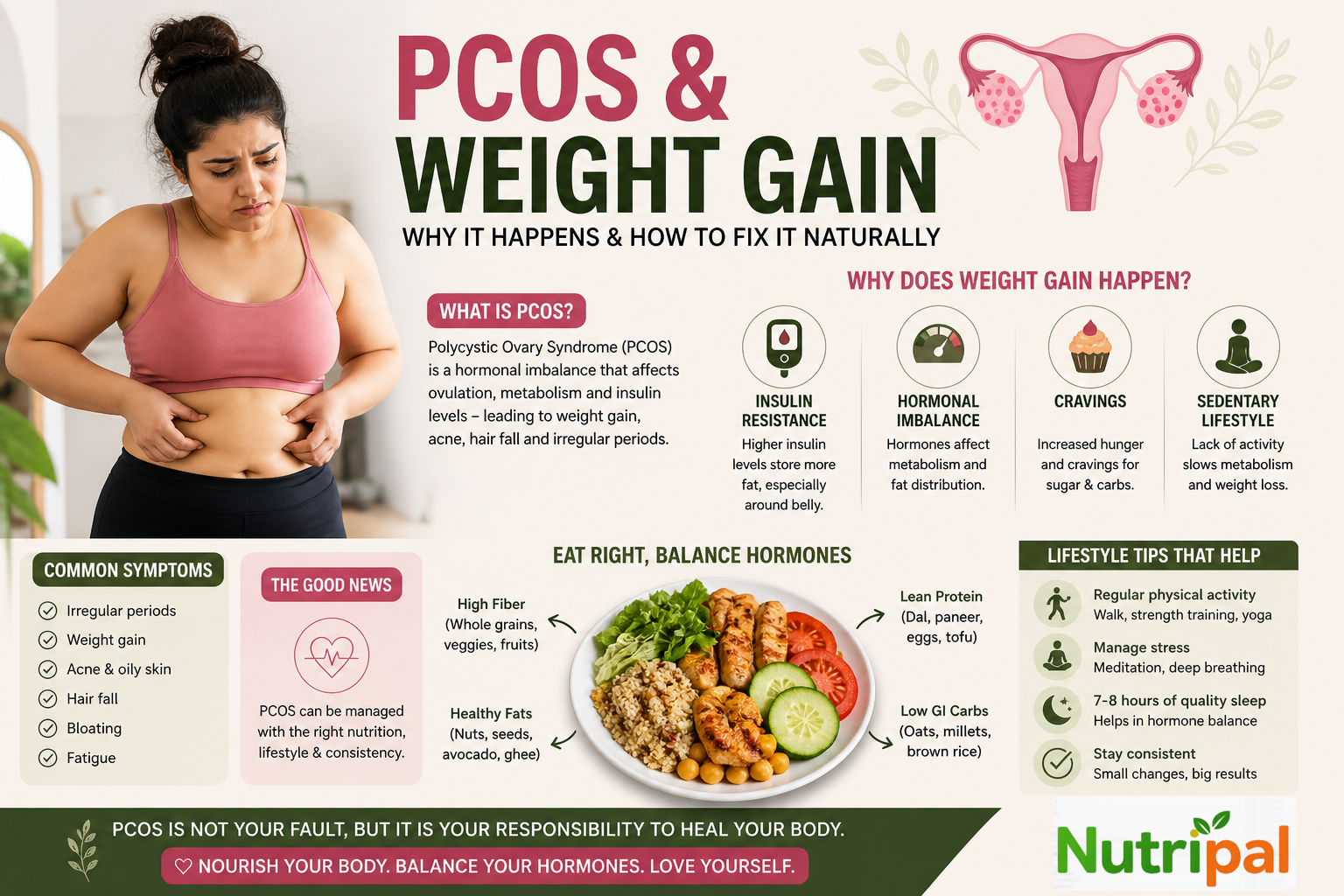
Your body is not resisting weight loss, it’s protecting itself. The right diet can help reverse this pattern.
FAQ
Can PCOS weight gain improve without crash dieting?
Yes. The best results usually come from stabilizing blood sugar, improving protein intake, and creating a routine your hormones can tolerate consistently.
Why do cravings feel stronger in PCOS?
Insulin resistance and unstable blood sugar can increase cravings for sugar and refined carbs, especially when meals are irregular or too low in protein.
Is exercise enough without a food plan?
Exercise helps, but PCOS usually responds best when activity is paired with a structured diet that supports insulin sensitivity and hormone balance.